
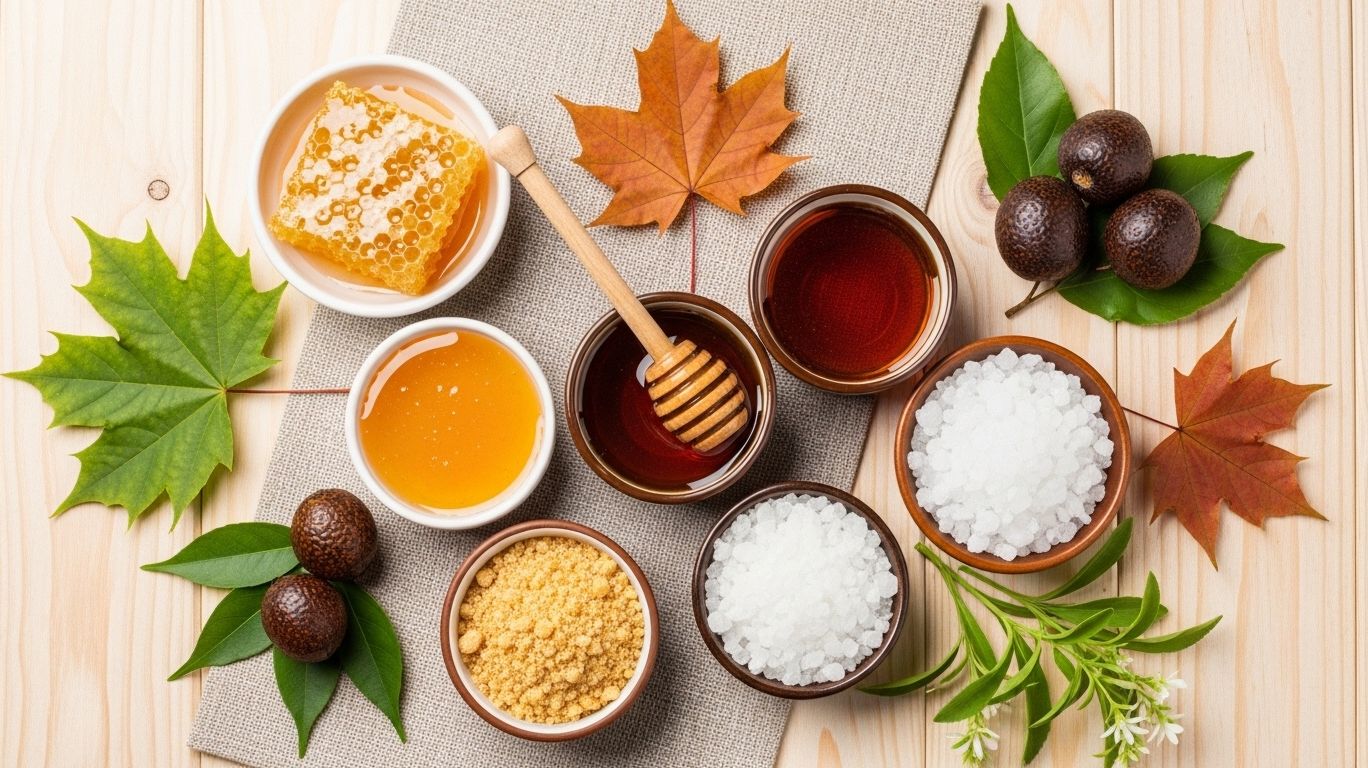
Natural sweeteners provide alternatives to refined sugar with distinct nutritional and metabolic profiles. Many natural sweeteners offer a way to enjoy sweetness without the same downsides as refined sugar. Some even bring added nutrients and health perks.
Here is what makes them worth a closer look.
What are Natural Sweeteners?
Natural sweeteners come from plants or whole food sources and undergo minimal processing. They provide sweetness without relying on refined white sugar or artificial substitutes.
Common examples include honey, maple syrup, coconut sugar, and stevia. Many contain trace nutrients or compounds that set them apart from highly processed options.
Are Natural Sweeteners Better?
Yes. Natural sweeteners can cause fewer blood sugar spikes and provide trace nutrients compared with refined sugar. These sweeteners often affect glucose levels more gently, retain plant-based compounds, and contain small amounts of antioxidants or minerals.
Lower Impact on Blood Sugar
Some natural options affect glucose levels more gently.
- Stevia and monk fruit do not cause sharp spikes
- A review in Nutrition Today reported stevia may help improve glycemic control
Contains Trace Nutrients
Certain sweeteners retain small amounts of beneficial compounds.
- Honey contains antioxidants like flavonoids
- Maple syrup offers minerals such as manganese and zinc
- Research in the Journal of the American Dietetic Association identified polyphenols in maple syrup
Less Processed Composition
Natural sweeteners often go through simpler processing.
- Preserve plant-based compounds
- Avoid synthetic additives found in artificial alternatives
May Support Gut and Overall Health
Some provide functional benefits beyond sweetness.
- Raw honey shows antibacterial activity, supported by studies in Asian Pacific Journal of Tropical Biomedicine
- Certain types may support gut health through natural compounds
Stronger Sweetness Means Less Use
Some taste sweeter than sugar, so smaller amounts work.
- Stevia and monk fruit require less to achieve the same taste
- Helps reduce overall calorie intake
What are the Best Natural Sweeteners?
Sweetener options include products such as NOW Foods BetterStevia for no-calorie sweetness and Lakanto Monk Fruit Sweetener for zero glycemic impact. Natural sweeteners with trace nutrients include Maple Grove Farms Pure Maple Syrup and Madhava Organic Coconut Sugar, all of which appear in comparative analyses by nutrition experts. The best natural sweeteners offer sweetness with a lower glycemic impact or added benefits. The list below ranks top options from lowest to highest glycemic index.
| Sweetener | Glycemic Index | Calories | Key Benefit | Best Use |
| Stevia | 0 | 0 | No blood sugar impact | Drinks, low calorie diets |
| Monk Fruit | 0 | 0 | Antioxidant compounds | Beverages, desserts |
| Yacon Syrup | 1 | Low | Gut health support | Toppings, cold use |
| Coconut Sugar | 35 | Moderate | Trace nutrients | Baking |
| Maple Syrup | 54 | Moderate | Antioxidants | Pancakes, sauces |
| Honey | 58 | Moderate | Antibacterial properties | Tea, spreads |
1. Stevia
Stevia comes from the leaves of the Stevia rebaudiana plant and contains compounds called steviol glycosides that provide intense sweetness without calories. It does not raise blood sugar levels, making it a strong option for glucose control.
Glycemic Index: 0
Pros
- Zero calories
- No blood sugar spike
- Highly concentrated
- Suitable for diabetes management
Cons
- Slight bitter aftertaste
- Often blended with additives
2. Monk Fruit
Monk fruit extract contains mogrosides that deliver sweetness without affecting blood glucose. It works well in beverages and low calorie recipes.
Glycemic Index: 0
Pros
- No impact on blood sugar
- Contains antioxidant compounds
- Zero calories
- Heat stable
Cons
- Expensive
- Often mixed with fillers
3. Yacon Syrup
Yacon syrup comes from the yacon root and contains fructooligosaccharides that resist digestion. These compounds act as prebiotics that support gut bacteria.
Glycemic Index: 1
Pros
- Supports gut health
- Low calorie content
- Minimal blood sugar impact
- Mild caramel taste
Cons
- Can cause digestive discomfort
- Not suitable for high heat cooking
4. Coconut Sugar
Coconut sugar comes from coconut palm sap and retains some minerals and antioxidants. It contains inulin, a fiber that may slow glucose absorption.
Glycemic Index: 35
Pros
- Less processed than white sugar
- Contains trace minerals
- Mild flavor
- Slightly slower absorption
Cons
- Still high in calories
- Can raise blood sugar
5. Maple Syrup
Maple syrup comes from the sap of maple trees and contains polyphenols that may support health. A study in the Journal of Functional Foods identified over 20 antioxidant compounds in maple syrup.
Glycemic Index: 54
Pros
- Contains antioxidants
- Provides minerals like manganese
- Natural flavor enhancer
- Less refined
Cons
- High sugar content
- Moderate glycemic impact
6. Honey
Honey is produced by bees and contains natural sugars along with small amounts of antioxidants and enzymes. Research published in the Asian Pacific Journal of Tropical Biomedicine highlights its antibacterial properties.
Glycemic Index: 58
Pros
- Contains antioxidants
- Antibacterial properties
- Natural source
- Widely available
Cons
- High in calories
- Raises blood sugar
How Do I Choose the Right Natural Sweetener?
Choosing the right natural sweetener depends on health goals, taste preference, and how you use it.
- Blood sugar control: Choose stevia or monk fruit since they do not raise glucose levels, supported by findings in Nutrition Today.
- Nutrient content: Pick honey or maple syrup for small amounts of antioxidants and minerals.
- Calorie intake: Use zero calorie options like stevia to reduce overall energy consumption.
- Taste preference: Select honey or coconut sugar for a more familiar flavor profile.
- Cooking method: Use heat stable options like monk fruit or coconut sugar for baking.
- Digestive tolerance: Avoid yacon syrup if sensitive to prebiotic fibers that may cause discomfort.
- Ingredient quality: Check labels and choose pure forms without fillers or additives.
Watch Your Sugar Intake with the Right Natural Sweetener
Natural sweeteners can make a real difference when chosen with intention and used in moderation. The right option depends on personal needs, from blood sugar control to taste and everyday use.
At Ocean Blue Innovation, we focus on providing clean, well sourced ingredients and solutions that support better choices, including natural sweetener options designed for both consumers and food businesses.
The goal stays simple: make healthier alternatives easier to access without overcomplicating the process.
Frequently Asked Questions
Can natural sweeteners help with weight loss?
They can support weight control when they reduce overall calorie intake. Options like stevia and monk fruit contain no calories, which helps limit excess energy consumption.
Are natural sweeteners safe for daily use?
Most natural sweeteners remain safe when used in moderate amounts. Health authorities like the FDA recognize stevia as safe within recommended limits.
Do natural sweeteners affect teeth like sugar?
Some do less harm than refined sugar. Stevia and monk fruit do not contribute to tooth decay since bacteria do not ferment them.
Can children consume natural sweeteners?
Children can consume certain options like honey and maple syrup in small amounts. Avoid giving honey to infants under one year due to safety risks.
Do natural sweeteners expire?
Yes, they can lose quality over time. Liquid options like honey and maple syrup last long when stored properly, while powdered forms depend on packaging conditions.
Are natural sweeteners suitable for keto diets?
Some fit keto guidelines. Stevia and monk fruit work well since they contain no carbs that impact ketosis.