
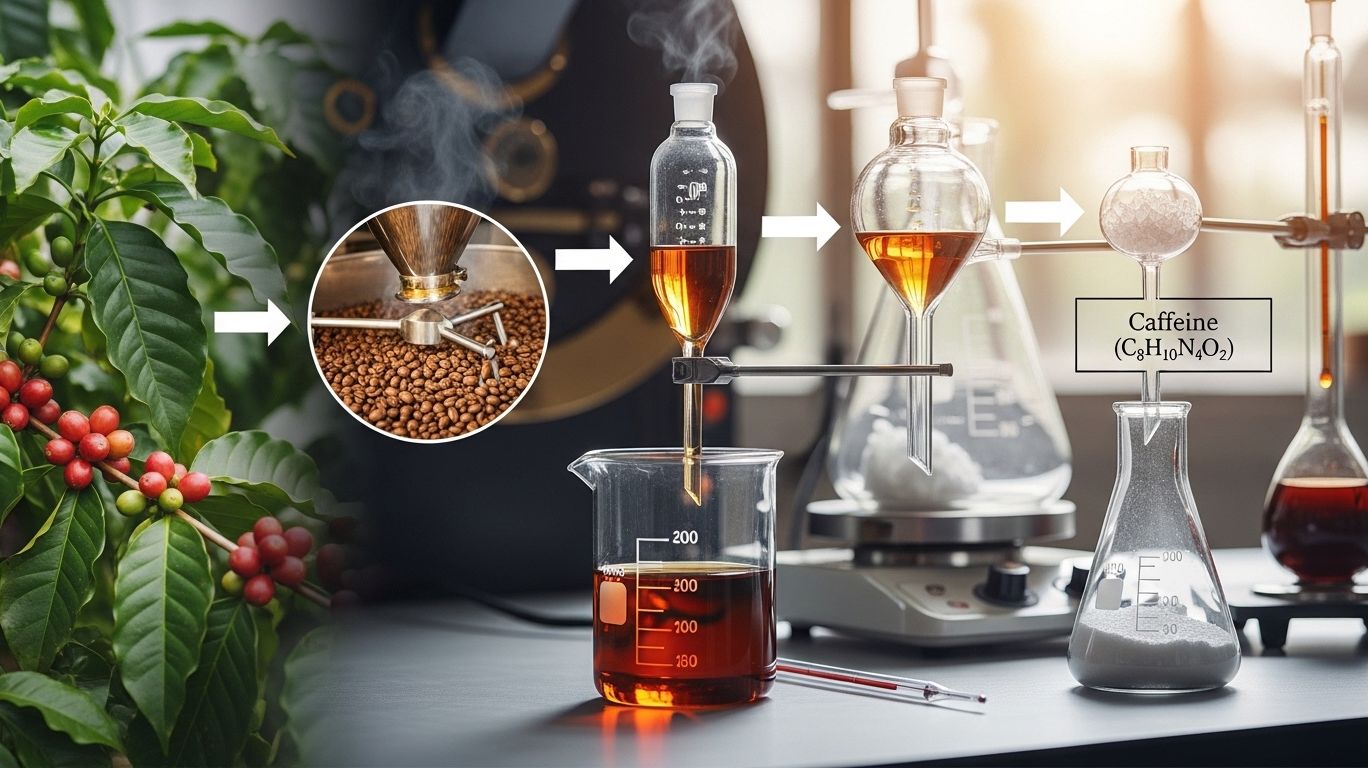
Caffeine comes from plants and from lab production. It drives energy and focus in drinks and foods. Knowing how it forms shows what powers every sip.
How Is Caffeine Made?
Plants create caffeine through a natural biosynthesis process that converts compounds like xanthosine into caffeine using enzymes.
Coffee beans from brands like Nescafé and tea leaves from Lipton produce caffeine naturally, helping plants defend against insects. Manufacturers also produce caffeine in labs using chemical synthesis to meet demand for food, drinks, and supplements.
These two paths lead to the same active compound but follow very different processes.
How Do You Extract Natural Caffeine?
Natural caffeine comes from plant materials through controlled extraction methods.
- Harvest coffee beans, tea leaves, or guarana seeds
- Soak or steam the material to release soluble compounds
- Use solvents like water, carbon dioxide, or ethyl acetate to isolate caffeine
- Filter and purify the extract to remove residues
- Dry the final product into powder or concentrate
Research from the National Coffee Association explains that supercritical carbon dioxide extraction preserves flavor compounds while isolating caffeine efficiently.
How Do They Make Synthetic Caffeine?
Synthetic caffeine comes from chemical reactions using basic industrial compounds.
- Start with precursors like urea and chloroacetic acid
- Run controlled reactions to form intermediates such as methylated xanthines
- Refine the compound through crystallization
- Test purity and consistency before use
According to a study published in the Journal of Food Science, lab made caffeine matches the molecular structure of natural caffeine, which results in identical effects on the body.
How Does the Body Process Natural and Artificial Caffeine?
The body processes natural and synthetic caffeine the same way. Both share the same chemical structure, so the body does not distinguish between them.
| Process Stage | What Happens in the Body | Key Detail |
| Absorption | Caffeine enters the bloodstream through the stomach and small intestine | Absorption begins within minutes |
| Peak Levels | Blood concentration reaches its highest point | Usually within 30 to 60 minutes |
| Brain Interaction | Caffeine blocks adenosine receptors | Reduces fatigue and increases alertness |
| Metabolism | The liver breaks it down using enzymes like CYP1A2 | Produces metabolites such as paraxanthine |
| Elimination | The body removes it through urine | Half life ranges from 3 to 7 hours |
Research from the National Institutes of Health shows that caffeine blocks adenosine receptors, which delays the feeling of tiredness and improves focus. The same source confirms that the liver enzyme CYP1A2 handles most caffeine metabolism.
- The process starts when caffeine enters the bloodstream and travels to the brain. It binds to adenosine receptors and prevents signals that trigger drowsiness.
- The liver then breaks it into active compounds that continue to stimulate the body.
- The kidneys filter these compounds and remove them through urine.
- This entire process works the same for both natural and synthetic forms.
When Should I Choose Natural Caffeine?
Choose natural caffeine when added nutrients and a smoother intake matter more than pure stimulation.
- For slower energy release: Coffee and tea contain compounds like polyphenols that slow absorption and reduce sudden spikes.
- For added antioxidants: Harvard T.H. Chan School of Public Health notes that coffee and tea provide antioxidants linked to reduced inflammation.
- For fewer additives: Whole sources avoid synthetic fillers often found in processed energy products.
- For better taste experience: Natural sources deliver complex flavors that enhance consumption.
- For traditional consumption habits: Tea and coffee offer familiar routines that support consistent intake.
When Should I Consider Artificial Caffeine?
Choose artificial caffeine when precision, convenience, and controlled dosing matter most.
- For exact dosage control: Synthetic caffeine allows precise measurement, which supports consistent intake in supplements and energy products.
- For portability and convenience: Pills, powders, and fortified drinks offer quick access without preparation.
- For low calorie intake: Many synthetic caffeine products contain little to no calories or added sugars.
- For performance focused use: The International Society of Sports Nutrition states that caffeine improves endurance and alertness when taken in measured doses.
- For product consistency: Lab production ensures uniform strength across batches, which helps maintain predictable effects.
How Should I Check Labels for Caffeine?
Check labels by focusing on the exact caffeine content and source. This helps avoid overconsumption and ensures better control over intake.
- Look for caffeine amount: Check milligrams per serving to understand total intake.
- Scan serving size: Compare caffeine content with the actual portion consumed.
- Identify the source: Labels may list coffee extract, tea extract, guarana, or synthetic caffeine.
- Watch for hidden sources: Ingredients like guarana and yerba mate also contain caffeine.
Some products list total caffeine clearly, while others hide it within blends.
- Check proprietary blends: These may not disclose exact caffeine amounts.
- Review supplement facts panel: This section often provides clearer details than front labels.
The U.S. Food and Drug Administration states that healthy adults should limit caffeine intake to about 400 milligrams per day, which makes label awareness essential for safe consumption.
Learn the Right Caffeine Type for You
Caffeine comes from both natural and synthetic sources, yet the body handles them the same way. The right choice depends on lifestyle, goals, and how each source fits daily use.
Manufacturers apply standardized procedures to ensure consistent and high‑quality caffeine ingredients in beverages and supplements, which supports product reliability across markets.
Frequently Asked Questions
Does natural caffeine last longer than synthetic caffeine?
No. Both forms share the same chemical structure, so they produce similar duration and effects in the body.
Can caffeine content vary in natural sources?
Yes. Coffee, tea, and other plants show variation based on growing conditions, processing, and preparation methods.
Is synthetic caffeine safe to consume daily?
Yes, when taken within recommended limits. The U.S. Food and Drug Administration considers moderate intake safe for healthy adults.
Why do some drinks feel stronger than others with the same caffeine amount?
Other compounds like sugar, amino acids, and plant chemicals can influence how the body responds to caffeine.
Can caffeine degrade over time in products?
Yes. Heat, light, and storage conditions can reduce potency, especially in ready to drink beverages and supplements.